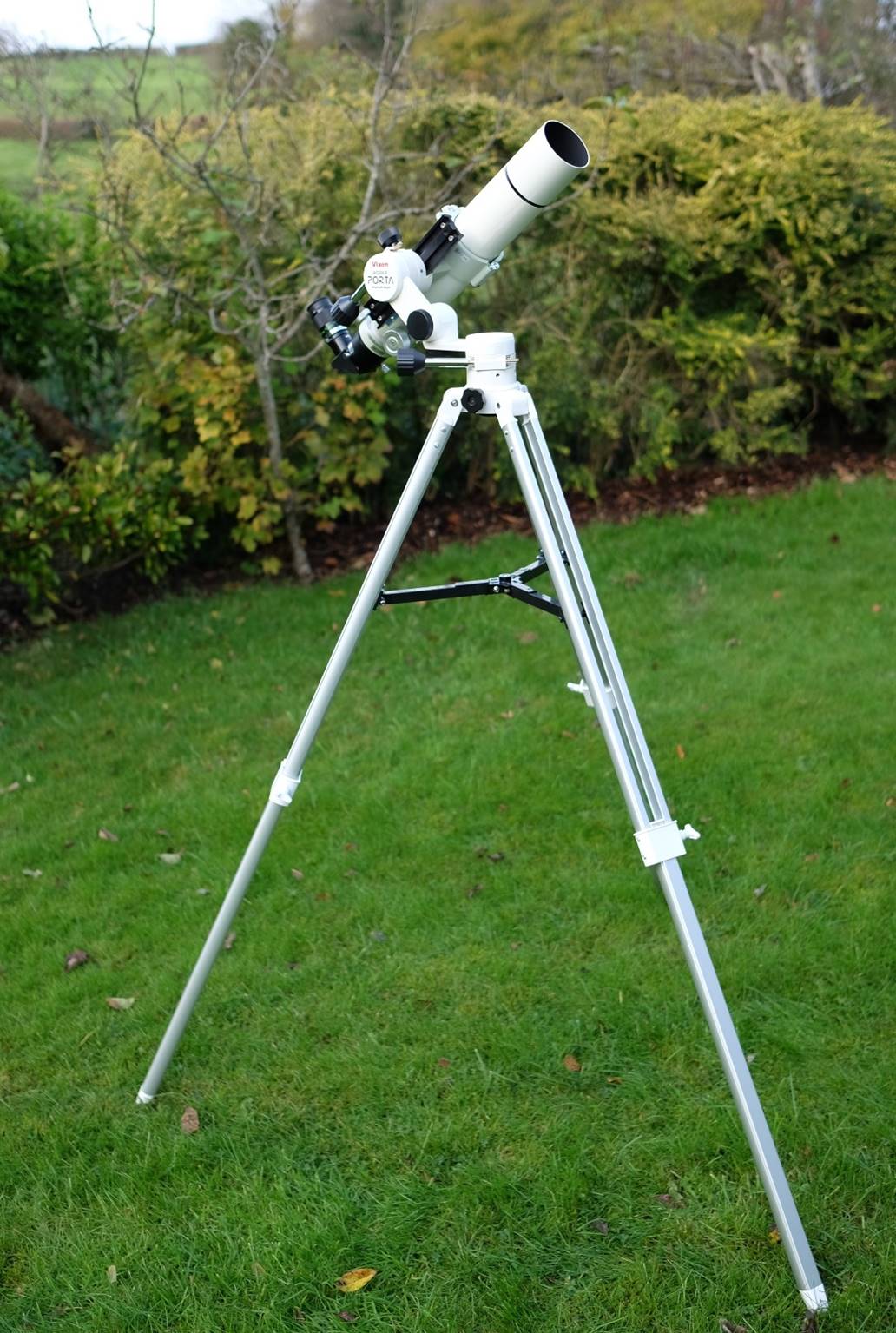
Vixen Mobile Porta Mount Review

Twenty years ago, I bought myself a
mount when I got back into astronomy. That mount was a Vixen GP. It was a
beautifully made thing for its modest price. Fifteen years later when I sold
it, it worked and looked like new.
I replaced the GP with another Vixen,
an SX2. I like it even better – one of my favourite bits of astro’
gear. I use the SX2 in pretty much all my scope reviews. So, when I wanted a
light and really portable alt-az mount, Vixen was the
obvious choice.
This Vixen Mobile Porta is the
replacement for the old Mini Porta, an excellent little mount, as was the
larger Porta I once owned. It seems ideal – a light alt-az with push-pull and slow-motion controls, meant to hold
up to 3Kg with a standard Vixen dovetail – exactly what I need for small
peripatetic scopes like the Tele Vue Ranger and Takahashi FS-60Q.
At
A Glance
|
Mount |
Mobile
Porta |
|
Weight |
2.4Kg
incl. tripod |
|
Capacity |
3.5Kg
(Vixen) 2Kg (Me) |
Data from Vixen.
What’s
in the Box?
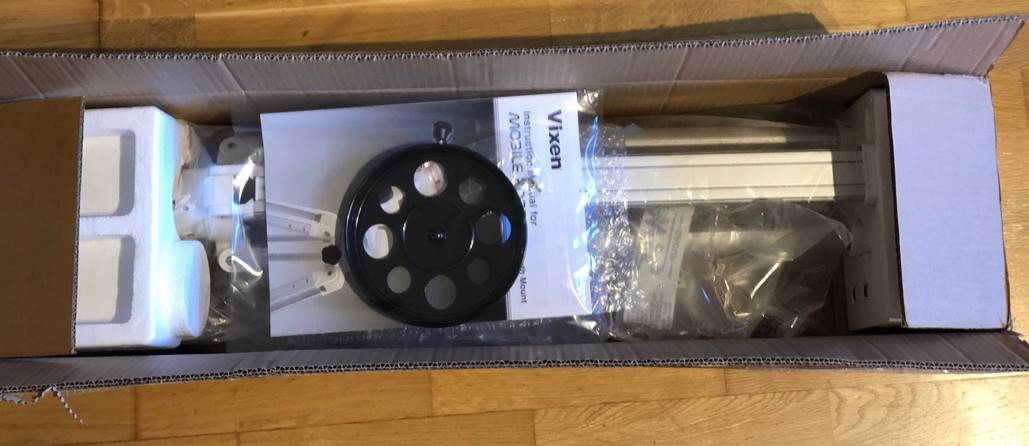
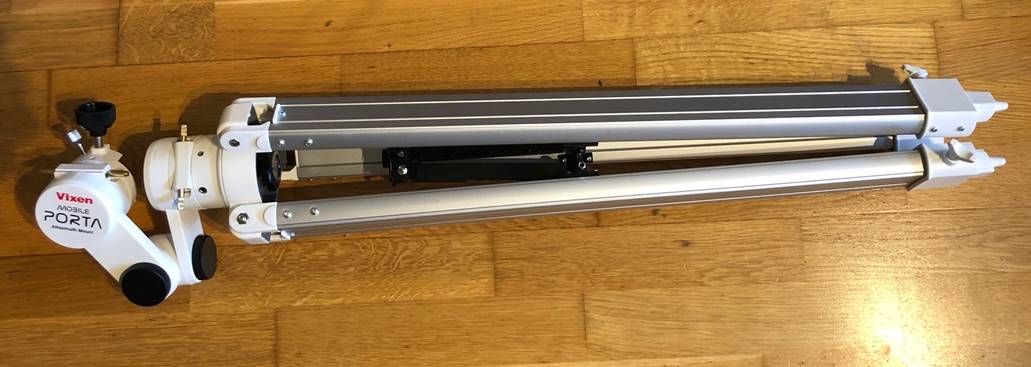
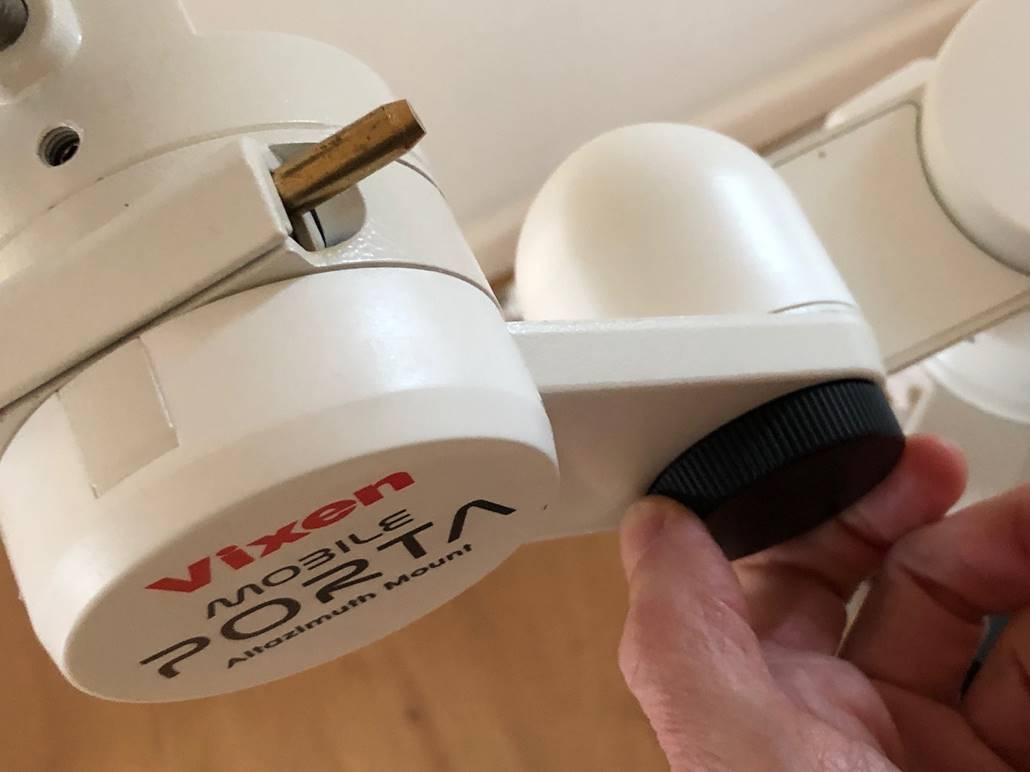
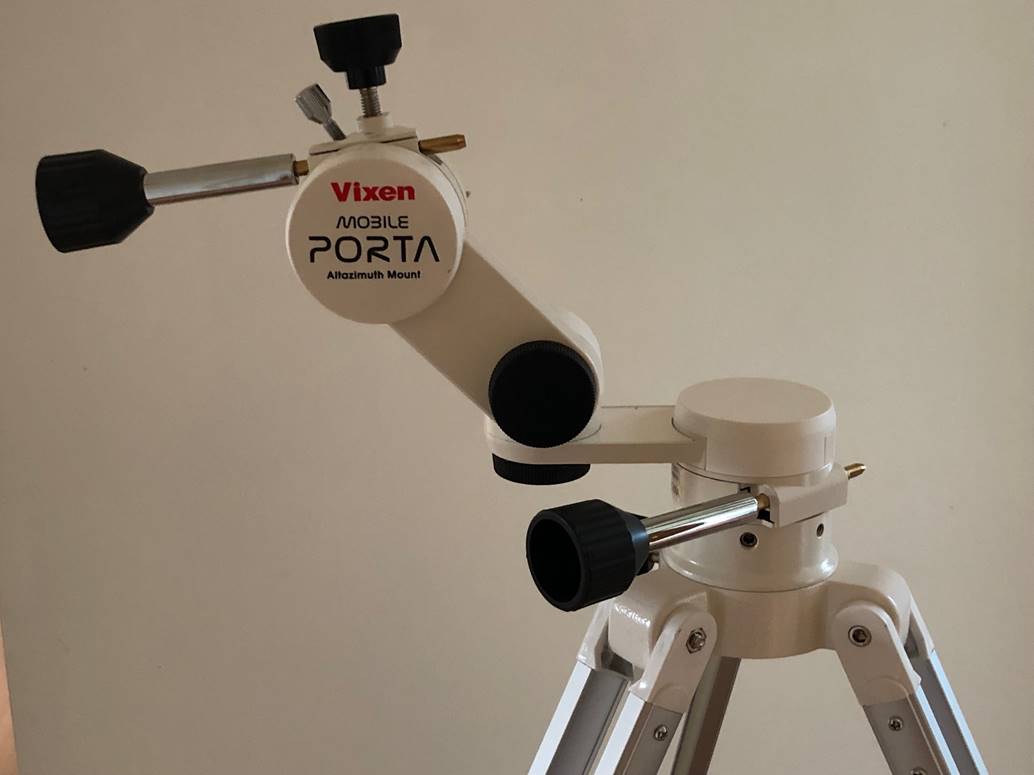
Unfolding the Mobile Porta mount
head.
Design and Build
The mobile Porta shares styling cues
with other current Vixen mounts and looks much like the old Porta I owned, even
down to the white powder coat. Unfortunately, this is an illusion.
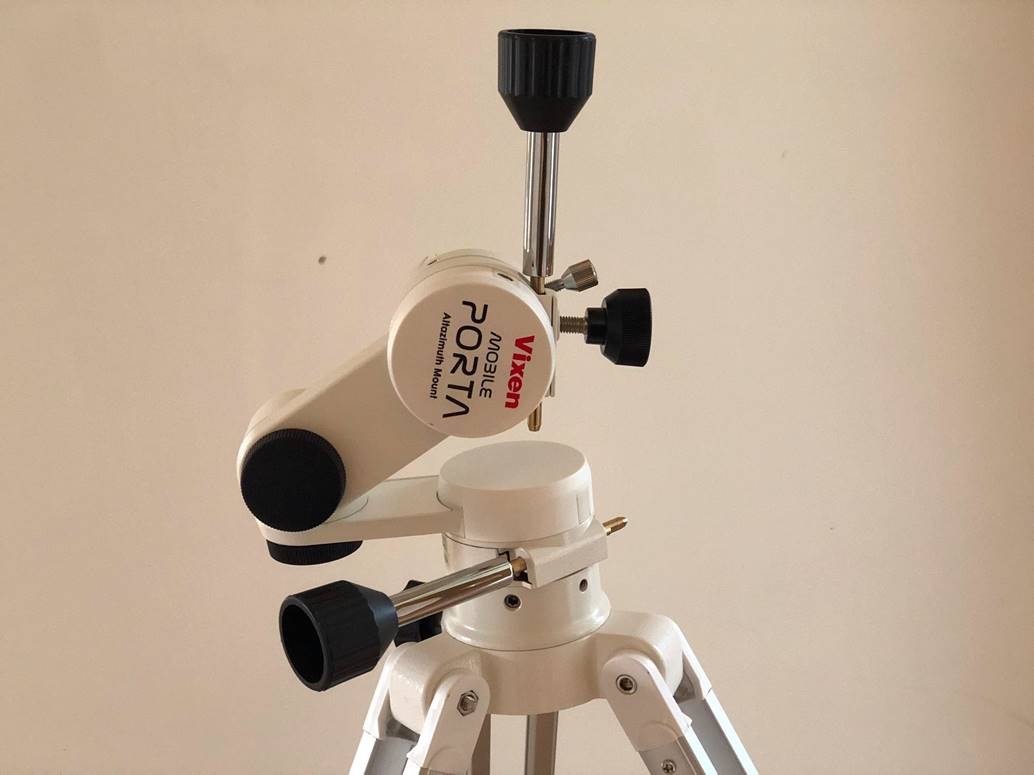
The basic design is similar to the
Porta too – a single arm push pull fork head and a built-in Vixen
dovetail plate, with variable tension and slow motion controls. I find this to
be a very flexible design for an alt-az – push
it into position and then make fine adjustments and track with the slo-mo handles.
One obvious difference between the
Mobile Porta and the older models is that the fork isn’t a single
casting, but has a folding part so it packs up smaller. The mobile Porta is
extremely light – just over two kilos. With a little 60-80mm scope your
whole package should be less than 4 Kg. Sounds great, for both travelling and
grab-n-go.
Finally, it’s worth noting that
basic Vixen scopes of old often got paired as a package with a Porta, like the
A70LF you see below. This was pretty lucky for a beginner because the Porta was
a quality thing. Nowadays the hapless beginner is likely to get a Mobile Porta
with their Vixen long-focus achromat or small Newtonian – not so lucky. Why
so?
The problem is that to get to get the
weight or cost down (or both), the materials used in the Mobile Porta are much
flimsier than the old Porta. It’s made of the cheapest plastics and
bendiest metal components. If you squeezed the tripod legs too hard
they’d snap. The slightest knock marrs the
plastic. The tripod spreader, eye piece tray and tripod clamps are so thin
they’re like toy-stuff and won’t last more than a few outings.
The odd thing is the way
they’ve copied the look of the Porta, but not the function, like some
rip-off Rolex. Take the slo-mo handles. On my old
Porta these were solid metal rods held on by grub screws. The ones on the
Mobile Porta look identical, but are chromed plastic and push on. They bend so
much it would be easy to snap one just pushing it into place. A few times on
and off for travel and they’ll break for sure.
All this might be OK if the Mobile
Porta was super-cheap, but it’s not. At 2/3 the price of a Porta,
it’s terrible value for such shoddy stuff. But does that poor quality
matter in use? After all, the design seems sound. Let’s see.
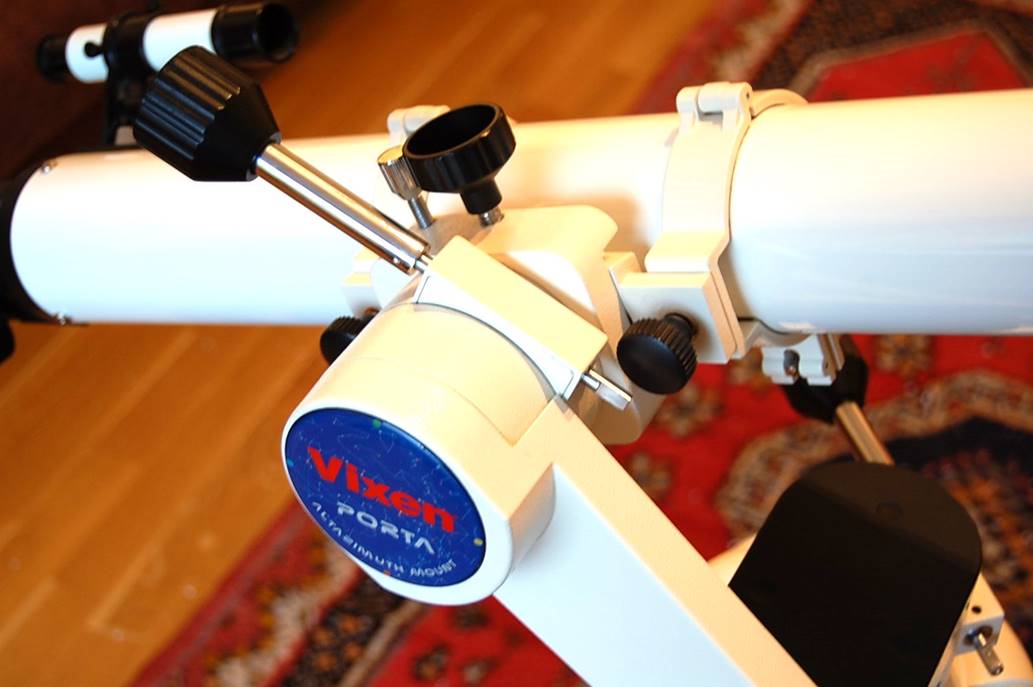
Original Porta mount – solid
and robust.
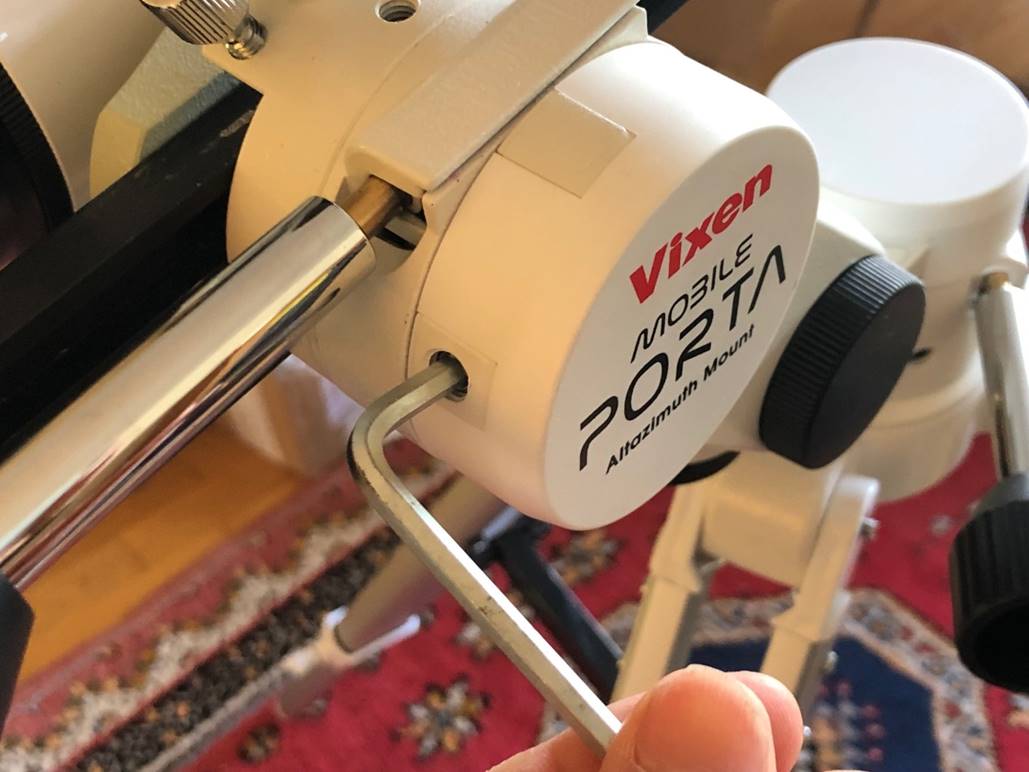
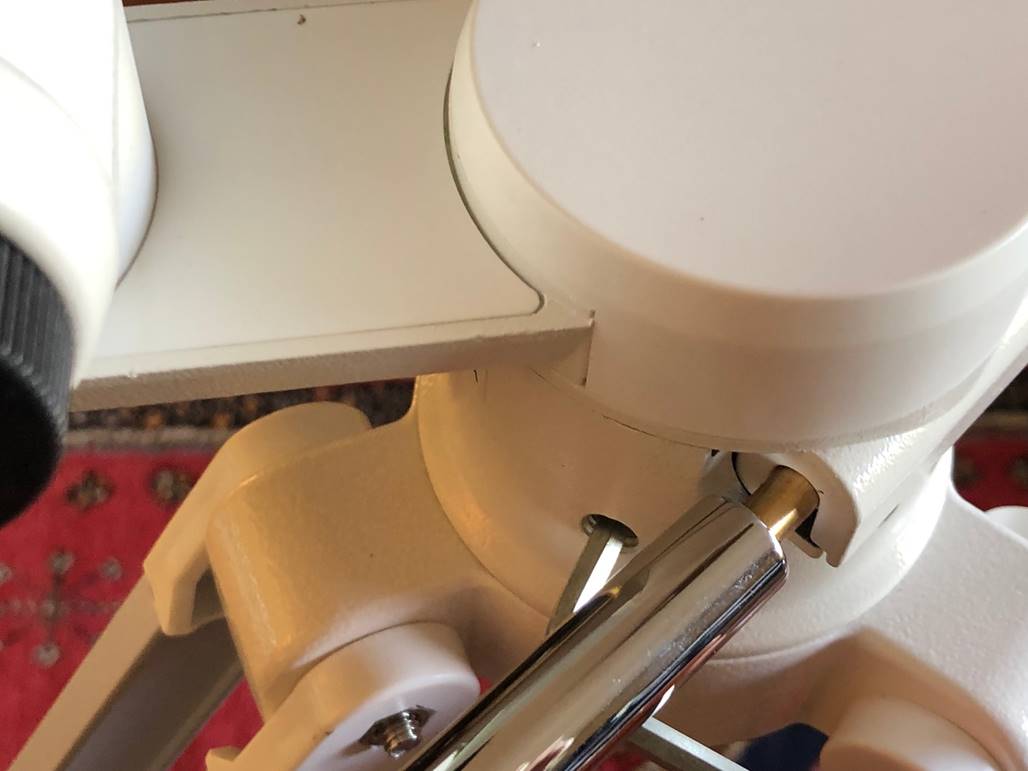
Adjusting altitude and azimuth
tension is easy with the supplied Allen key.
In
Use – Daytime
The Mobile Porta is quick to set up
and get observing. Just unscrew a thumb wheel, fold out the fork arm and get
your dovetail clamped in. The only adjustment is the push-pull friction on each
axis and that’s easy to do with the supplied Allen keys (see photo). I
can’t deny that super-lightness is a benefit: a small rig would be
one-hand portable by a child.
But once you’re out and
observing the trouble starts. Because it’s obvious without even looking
through the scope that the whole thing flexes and bends as you push it up and
down, even with the friction controls at their lightest, even carrying the
lightest scopes. It feels like it might break.
Once viewing things get worse. I
tried the Mobile Porta with various scopes during the day, for spotting and
bird watching through the windows and in the garden. All the scopes I tried
weighed ~1.5-2Kg (it’s supposed too handle
twice that), including a Borg, an FS-60C and Q and a TV Ranger. Only the FS-60C
was vaguely usable owing to its very short tube. The others vibed so much it
was hard just getting focus beyond low powers. And all the while I was afraid
I’d snap something off (and I’m not heavy handed).
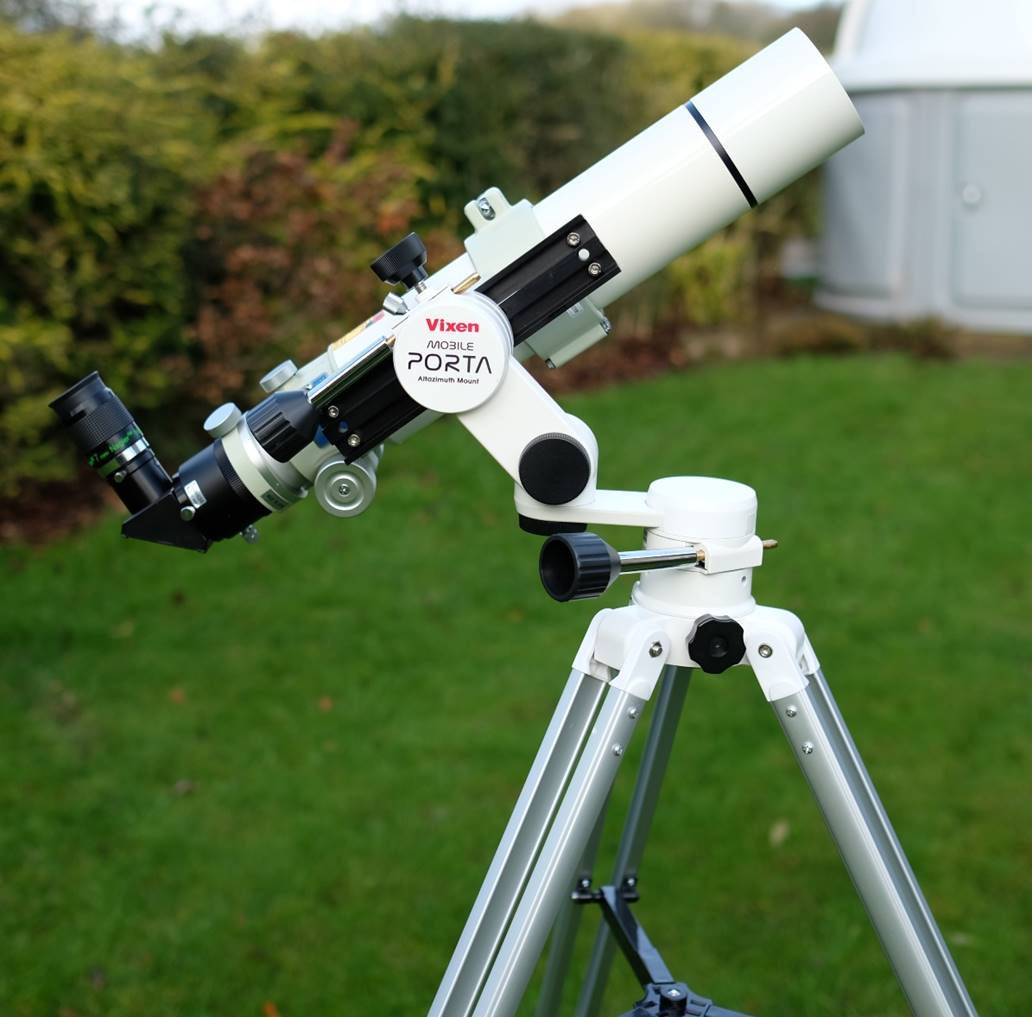
Mobile Porta carrying ~2Kg of
Takahashi FS-60Q.
In
Use – Photography
The mobile
Porta is too vibey for all but the quickest Moon snaps, but I successfully took
some images of a setting daytime Moon with the FS-60C and flattener, albeit
using a light camera body. Being able to move the manoeuvre the whole rig
around steps and narrow paths to get the best angle was a bonus of the
Porta’s incredibly light weight.
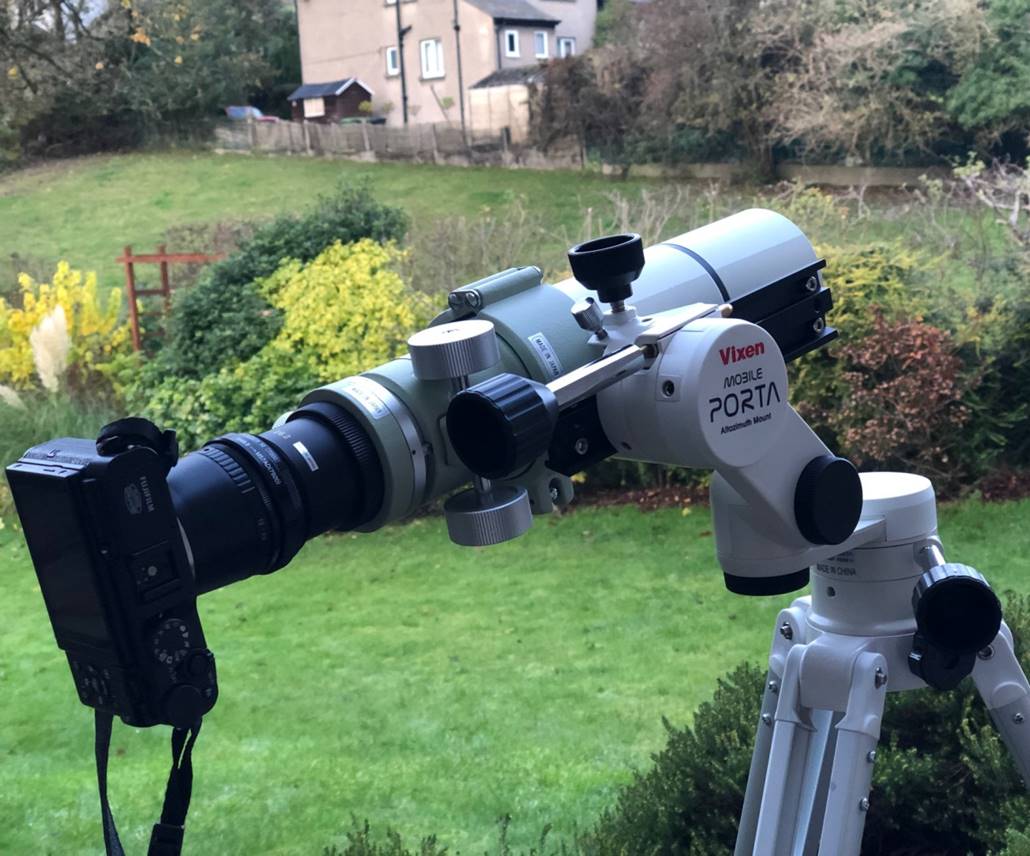
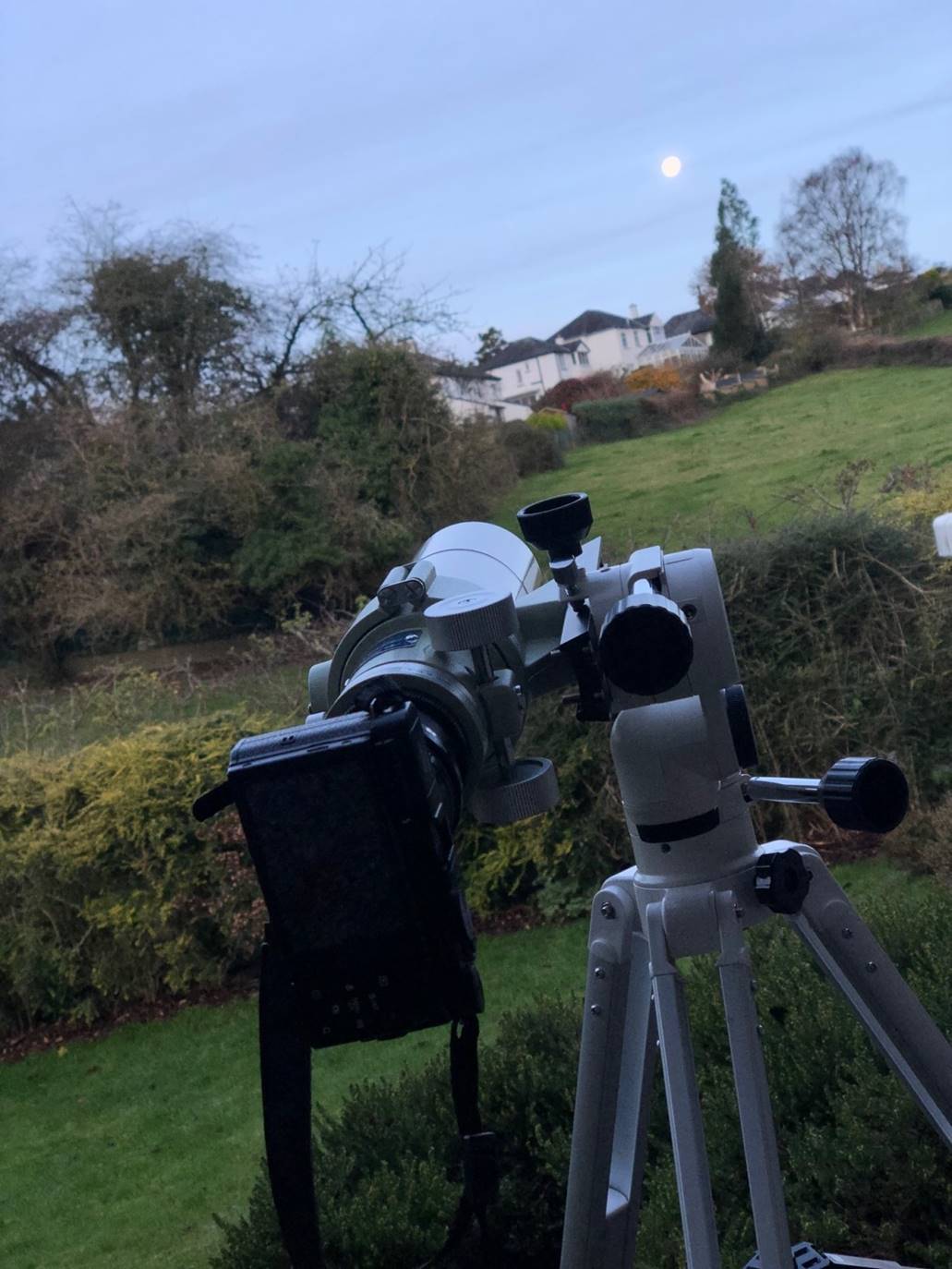

Capturing the
setting Moon with FS-60C/Vixen Mobile Porta.
In
Use – The Night Sky
At night, the Mobile
Porta is best for star sweeping at low powers. I tried the Moon at 101x with
the FS-60C and it was perfectly possible, including using the slow motions to
track, but the vibes took a long while to damp and focusing was a bit tricky.
It was usable though and again I
did appreciate the ease of carrying it as a complete system – less than
4Kg all-in: mount, scope, diagonal, Nagler.
Summary
The mobile Porta is not the best
piece of astro’ kit I’ve bought recently. Yes, it’s light.
Yes, it looks good, but …
The design seems basically sound. The
problem is the materials. At anything above 40x the vibes are terrible, except
with the shortest OTAs. The fittings on the tripod are of such poor plastic
they would likely break after a few outings or a few knocks in the dark.
To be clear, this may look like a
Porta or my SX2, but quality is at a totally different level. I would have
wondered if it was a rip-off, a counterfeit, had I not bought it from the
official importer – it really is that flimsy.
Sadly, I’ll be a bit wary of
buying Vixen gear in future. There’s flawed equipment and gear that’s
just not good enough. This sort of quality on a Celestron Travel Scope is more
excusable because it’s cheap, but the Mobile Porta lists for almost as
much as a TV TelePod mount head (really? really?) and honestly you could
buy a tripod of that quality for the price of a drink.
Essentially, the Mobile Porta is a
decent design that’s just been too cheaply produced and isn’t good
enough. I bought it for my own use, but sent it back.
The Vixen Mobile Porta is not really
recommended, unless you need the lightest dovetail-compatible mount for a tiny
scope and don’t care how long it will last.